Welcome to Copperlink International Company!

- Call Us for help!
- +91 9819742205

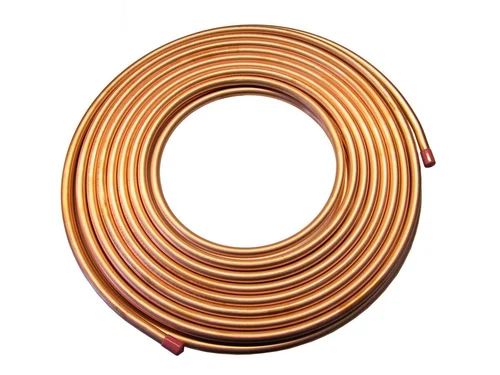
Copper Coil For HAVC
Manufacturer,Stockist and Exporter of Copper Coil For HAVC
Copper coils are a crucial component in HVAC (Heating, Ventilation, and Air Conditioning) systems. They are primarily used for heat exchange, transferring heat between air and refrigerant efficiently. Copper’s excellent thermal conductivity makes it ideal for this purpose. These coils ensure that HVAC systems operate with high energy efficiency. Their durability allows them to withstand high pressures and temperatures. Additionally, copper coils resist corrosion better than many other metals. This makes them reliable for both residential and commercial HVAC systems.
One of the main advantages of copper coils is their superior thermal conductivity. This property allows the coil to transfer heat faster, leading to better cooling or heating performance. HVAC systems with copper coils consume less energy due to efficient heat transfer. Furthermore, copper coils have a high coefficient of expansion, making them less prone to cracks during temperature fluctuations. Their malleability allows them to be bent or shaped as needed without breaking. This flexibility is crucial for designing compact HVAC systems.
Copper coils are resistant to corrosion and rust, ensuring longevity in HVAC systems. This is particularly important in areas with high humidity or corrosive environments. Many copper coils are coated with anti-corrosion materials for additional protection. They maintain their structural integrity even after years of continuous operation. The resistance to scaling also helps maintain consistent airflow and system efficiency. Moreover, copper’s natural antimicrobial properties reduce the growth of harmful microorganisms. This contributes to cleaner air circulation within the HVAC system.
These coils are commonly found in both air conditioners and heat pumps. In air conditioners, copper coils facilitate the removal of heat from indoor air. In heat pumps, they function efficiently during both heating and cooling cycles. The compact design of copper coils allows HVAC systems to be smaller yet highly effective. Their lightweight nature reduces the overall system weight, making installation easier. Copper coils are also compatible with a wide range of refrigerants. This adaptability makes them suitable for modern, eco-friendly HVAC solutions.
Maintenance of copper coils is relatively straightforward. Regular cleaning ensures optimal performance and prevents energy wastage. Unlike aluminum coils, copper coils are easier to repair in case of leaks. HVAC technicians often prefer copper due to its weldability and ease of handling. This results in lower long-term maintenance costs. Routine inspections can extend the life of copper coils significantly. Overall, these coils contribute to the reliable operation of HVAC systems over decades.
The manufacturing quality of copper coils affects HVAC efficiency. Precision in coil winding ensures maximum heat transfer. High-quality copper with minimal impurities enhances thermal conductivity. Many HVAC manufacturers use C12200 or C11000 copper grades for their coils. These grades offer a perfect balance of strength and conductivity. Proper finning and tubing design maximize surface area for heat exchange. This design also reduces pressure drop, improving system efficiency.
Copper coils support eco-friendly HVAC operations. Efficient heat transfer reduces electricity consumption, lowering carbon footprints. They are compatible with environmentally safe refrigerants, promoting sustainable practices. Copper is also 100% recyclable without losing its properties. This makes HVAC systems with copper coils more environmentally responsible. Additionally, the long lifespan of copper coils reduces the need for frequent replacements. The combination of efficiency and sustainability makes them ideal for green buildings.
Copper coils offer flexibility in system design. They can be manufactured in various shapes, sizes, and configurations. This allows HVAC engineers to optimize airflow and heat exchange in different spaces. Custom coil designs can fit tight spaces without compromising efficiency. Copper’s ductility ensures that even intricate coil designs remain durable. These coils are also lightweight, reducing installation challenges. Versatile coil designs improve overall system aesthetics and performance.
Specification Of Copper Coil For HAVC
| Parameter | Specification |
|---|---|
| Material | High-purity Copper (C11000 / C12200) |
| Outer Diameter | 5 mm – 28 mm (custom sizes available) |
| Wall Thickness | 0.3 mm – 1.2 mm |
| Coil Length | 10 m – 100 m (depending on requirement) |
| Coil Type | Seamless or Continuous Copper Tube Coil |
| Thermal Conductivity | ~385 W/m·K |
| Operating Temperature | -196°C to 400°C |
| Operating Pressure | Up to 28 bar (depending on diameter & thickness) |
| Surface Treatment | Plain / Anti-corrosion coated / Tinned |
| Compliance Standards | ASTM B280, EN 12735, JIS H3300 |
In HVAC systems, copper coils work with fins to enhance heat transfer. Aluminum fins are often attached to copper tubes to increase surface area. This combination improves overall system efficiency and reduces energy consumption. Proper fin spacing ensures uniform airflow and temperature distribution. Copper’s compatibility with aluminum ensures a strong and corrosion-resistant bond. The use of fins also prevents overheating of the coil during heavy loads. This ensures consistent comfort in indoor environments.
Copper coils are tested for pressure and leak resistance before installation. They undergo rigorous quality control to ensure durability and reliability. High-pressure testing ensures that the coils withstand the refrigerant system’s operating conditions. Leak-proof coils prevent refrigerant loss, protecting both performance and the environment. The smooth surface of copper tubes reduces friction and enhances refrigerant flow. High-quality copper coils maintain efficiency even under extreme operating conditions. This reliability is vital for critical HVAC applications.
The cost of copper coils is higher than aluminum, but the benefits justify the investment. Long-term energy savings compensate for the initial cost. Reduced maintenance and longer lifespan make copper coils cost-effective over time. Many commercial and industrial HVAC systems prefer copper for this reason. Copper coils also add value to HVAC systems due to their superior performance. The ability to withstand harsh conditions makes them a preferred choice worldwide. They are an investment in system longevity and efficiency.
Chemical Properties Of Copper Coil For HAVC
| Element | Typical Composition (%) | Purpose / Effect |
|---|---|---|
| Copper (Cu) | ≥ 99.90% | Main material; ensures excellent thermal conductivity and corrosion resistance |
| Silver (Ag) | ≤ 0.03% | Enhances conductivity slightly and improves material uniformity |
| Oxygen (O) | ≤ 0.04% | Controls ductility and prevents brittleness |
| Phosphorus (P) | ≤ 0.03% | Reduces oxidation during manufacturing; improves corrosion resistance |
| Lead (Pb) | ≤ 0.005% | Trace amounts; can affect machinability but negligible in HVAC coils |
| Iron (Fe) | ≤ 0.02% | Trace element; minor effect on mechanical strength |
| Nickel (Ni) | ≤ 0.005% | Trace element; improves corrosion resistance slightly |
Copper coils contribute to improved indoor air quality. Their antimicrobial properties help reduce bacterial and mold growth on the coil surface. This prevents unpleasant odors and potential health hazards. Properly maintained copper coils ensure cleaner airflow throughout the building. Their design allows easy cleaning and sanitization during maintenance. Clean coils maintain consistent temperature and humidity control. This enhances occupant comfort and safety in homes and workplaces.
Copper coils are widely used in both residential and commercial HVAC systems. Small residential units benefit from their compact size and efficiency. Large commercial systems rely on copper coils for high-capacity heat exchange. Industrial applications also use copper coils for robust performance under demanding conditions. Their versatility makes them suitable for diverse climates and environments. Copper coils remain the industry standard due to their reliability and effectiveness. Their proven performance ensures long-term satisfaction for users.
Mechanical properties Properties Of Copper Coil For HAVC
| Property | Specification / Value | Remarks |
|---|---|---|
| Tensile Strength | 210 – 250 MPa | Ensures the coil withstands internal pressure and mechanical stress |
| Yield Strength | 70 – 100 MPa | Indicates the stress at which the coil starts to deform permanently |
| Elongation at Break | 25 – 45% | High ductility allows bending without cracking during installation |
| Hardness (Brinell) | 40 – 60 HB | Moderate hardness ensures durability while remaining workable |
| Density | 8.92 g/cm³ | Standard density for high-purity copper used in HVAC applications |
| Thermal Conductivity | ~385 W/m·K | Supports efficient heat transfer in HVAC systems |
| Electrical Conductivity | ~100% IACS | Ensures minimal electrical resistance in coils and terminals if used in heating |