Welcome to Copperlink International Company!

- Call Us for help!
- +91 9819742205

Copper Coil For Electrical Applications
Manufacturer,Stockist and Exporter of Copper Coil For Electrical Applications
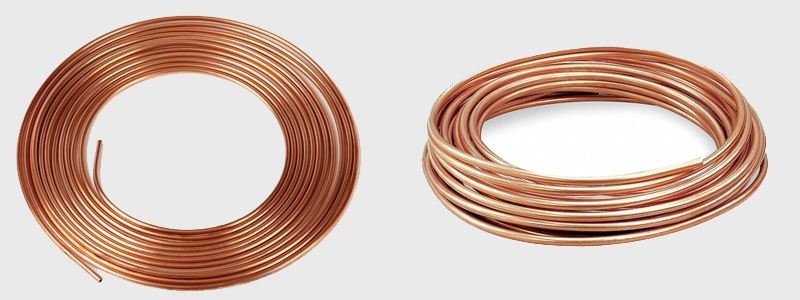
Copper coils are widely used in electrical applications due to their excellent conductivity, durability, and efficiency. They are integral components in transformers, motors, generators, and electromagnetic devices where electrical energy is transferred or stored. The high conductivity allows low resistance, minimizing energy loss during current flow. Copper’s malleability enables it to be formed into coils of varying shapes and sizes for different applications. Electrical engineers prefer copper coils over aluminum because copper offers higher performance for the same cross-sectional area. A well-designed copper coil enhances system reliability and longevity. Their use spans industries from power generation to consumer electronics.
The electrical conductivity of copper coils is a defining property that contributes to their superior performance. Copper, especially Electrolytic Tough Pitch (ETP) grade, maintains conductivity levels around 100% IACS, making it ideal for high-current systems. Electrical systems rely on consistent current flow, and copper ensures stable performance even in fluctuating temperature environments. Copper coils have minimal voltage drop, ensuring efficient energy transmission across circuits. This stability is critical in precision-driven environments like aviation, telecommunications, and medical equipment. Copper’s low thermal expansion coefficient also helps prevent deformation under high current loads. The material’s reliability boosts engineering confidence in high-intensity systems.
In electric motors, copper coils are used in stators and rotors to create magnetic fields necessary for motion. When electrical energy is passed through the coils, electromagnetic induction occurs, which drives rotational force. Copper’s superior conductivity ensures minimal power loss during this process, allowing better torque generation. Motor manufacturers often select copper winding to enhance efficiency and reduce operational heat. The performance benefits are particularly evident in high-demand applications like industrial machinery and electric vehicles. With advancing technology, copper coil designs continue to evolve to support higher energy densities. These developments offer increasingly compact and powerful electrical systems.
Transformers use copper coils to transfer electrical energy between circuits via magnetic induction. The primary and secondary copper windings regulate voltage levels and ensure stable power transmission. Copper minimizes resistive losses, making transformers more efficient over long operational periods. The heat resistance of copper coils helps prevent overheating, which is crucial in high-load transformer applications. Renewable energy systems, such as solar and wind farms, rely heavily on copper-based transformers to maintain output stability. Even in utility-scale grids, copper coils play an essential role in managing power distribution. Their durability reduces maintenance requirements over long service cycles.
Generators depend on copper coils to convert mechanical energy into electrical output through electromagnetic induction. In these systems, rotating magnetic fields interact with copper windings to produce electrical current. Copper’s consistent electrical properties ensure high-quality energy output with reduced fluctuations. This makes copper coils indispensable in petroleum refineries, mining operations, and remote site power generation. Portable generators also benefit from copper coils due to their lifespan and reliability. From small commercial devices to megawatt-level turbines, copper remains the leading conductor choice. Its contribution to global power infrastructure cannot be overstated.
Magnetic coils made from copper are used in electromagnetic devices such as solenoids, inductors, and actuators. These components rely on copper’s ability to generate strong magnetic fields at efficient current levels. Industrial automation systems use copper coils to trigger precise linear or rotary movements. Copper coils are also found in high-speed train brakes, robotic arms, and aircraft control systems. The low heat generation and sustained magnetic power ensure reliable and repeatable performance. In modern manufacturing, copper coil components enable highly responsive systems that remain stable under continuous use. Their durability reduces replacement costs and downtime.
Copper coil insulation is another critical factor in electrical applications. The insulation prevents electrical leakage and protects against environmental exposure. Materials like enamel, PVC, and polyester are commonly used to coat coil windings. These layers increase safety by blocking short circuits and enhancing voltage tolerance. Insulated copper coils are essential in transformers, motors, automotive alternators, and renewable power equipment. In harsh industrial environments, protective coatings help resist moisture, chemicals, and mechanical abrasion. Proper insulation improves coil longevity and maintains system reliability even under heavy operational stress.
Air-cooled copper coils are designed to dissipate heat naturally without external cooling fluids. These coils are commonly used in smaller electrical systems or environments with moderate heat output. Their simple construction makes them cost-effective and easy to install. Engineers often choose air-cooled designs for consumer electronics, automobiles, and low-power equipment. The lack of additional cooling systems simplifies maintenance and reduces overall energy use. However, air-cooled copper coils may not be suitable for high-intensity industrial operations. Their performance must be carefully matched to expected thermal loads.
Specification Of Copper Coil For Electrical Applications
| Property | Typical Value / Range | Unit | Test Method / Notes |
|---|---|---|---|
| Material Grade | C10100 (Electrolytic Tough Pitch), C11000 (Electrolytic Copper), OFHC options | — | Choose grade by purity and application (winding vs busbar). Supplier-specific. |
| Purity (Cu content) | ≥ 99.9% | % | Higher purity for OFHC and high-conductivity needs. |
| Electrical Conductivity | 95 – 101 (typical) % IACS | % IACS | Measured at 20°C; higher is better for low-loss windings. |
| Resistivity | ~0.0171 μΩ·m (or 1.72 μΩ·cm) | Ω·m / μΩ·cm | At 20°C. Small variations depending on alloy and temp. |
| Density | 8.89 | g/cm³ | Nominal (used for weight calculations). |
| Melting Point | ~1083 | °C | Informational. |
| Tensile Strength (annealed) | 110 – 220 | MPa | Varies with temper (annealed vs half-hard vs hard). |
| Yield Strength | 40 – 150 | MPa | Depends on temper and processing. |
| Elongation (on 50 mm) | 10 – 40 | % | Higher for annealed products; important for bending/forming. |
| Hardness (Brinell / HV) | ~40 – 110 HB (typical range) | HB / HV | Depends on temper. |
| Available Forms | Coil (strip), Round wire, Flat strip, Foil | — | Specify cross-section, gauge, or AWG for wires. |
| Dimensions — Width / Thickness | Width: 3 mm — 300 mm, Thickness: 0.05 mm — 6 mm (typical ranges) | mm | Custom sizes available per order; tolerances per agreement. |
| Diameter (wire) | 0.05 mm — 50 mm (depends on product type) | mm | For round conductors; larger diameters used for busbars. |
| Coil Inner Diameter (standard) | 200 mm / 400 mm / 508 mm (examples) | mm | Supplier-dependent; specify for handling/winding equipment. |
| Coil Weight | Up to several tons (depending on coil size) — typical coils: 5 kg to 2000 kg | kg | Specify maximum coil weight for logistics and equipment. |
| Surface Finish | Bright / Clean / Tinned (optional) | — | Tinning improves solderability and corrosion resistance. |
| Insulation / Coating | None (bare), enamelled (magnet wire), polymer coatings | — | Choose enamel grade for temperature class and dielectric strength. |
| Operating Temperature | −50 to +200 (depends on coating/insulation) | °C | Max temp limited by coating/insulation; bare copper stable at high temps. |
| Corrosion Resistance | Good (improves with protective coatings or tinning) | — | Service environment (outdoor, marine) may require special treatment. |
| Typical Applications | Transformer windings, motor windings, busbars, power cables, coils | — | Select grade & temper according to electrical & mechanical needs. |
| Quality / Inspection | Visual, dimensional, conductivity, tensile, chemical analysis | — | Specify sampling plan and acceptance criteria in purchase order. |
| Packaging | Wooden reel, steel drum, shrink-wrapped coil, pallet | — | Moisture protection and handling aids recommended. |
| Marking / Traceability | Batch number, grade, size, weight, heat number (if requested) | — | Important for critical electrical applications. |
| Notes / References | Customer to confirm exact grade, temper, dimensional tolerances and test requirements prior to order. | — | Supplier QA / Mill certificates available on request. |
Liquid-cooled copper coils employ circulating fluids, such as oil or water-glycol mixtures, to manage thermal buildup. These coils serve in high-performance environments where heat dissipation is critical. Examples include heavy-duty generators, electric vehicle propulsion systems, and high-capacity power transformers. The cooling fluid absorbs excess heat and maintains coil conductivity over longer duty cycles. Liquid-cooled systems enable higher power densities without compromising coil integrity. Although they require additional infrastructure, their efficiency gains outweigh the cost. These systems allow stable performance even under extreme operational conditions.
Copper coils in electrical applications must meet strict mechanical and chemical performance standards. Manufacturers evaluate tensile strength, hardness, and annealing conditions to ensure fabrication quality. Oxygen-free copper types help reduce impurities and maintain conductivity at ultra-high levels. Coil dimensions, thickness, and winding density are carefully engineered to optimize electrical properties. Precision machining tools ensure consistent spacing and coil uniformity. These details are crucial for maintaining electromagnetic performance and reducing mechanical fatigue. Proper engineering guarantees that copper coils withstand long-term operational stress.
Copper coil manufacturing processes include drawing, annealing, winding, and coating. Raw copper rods are drawn into fine wire through multiple dies to achieve required diameters. The wires are then annealed to restore flexibility and relieve internal stress. Advanced CNC machines or manual methods are used to form the coils. After winding, insulation coatings are applied to protect against environmental exposure. Each step ensures electrical conductivity, strength, and reliability. Quality control checks include dimensional testing, electrical resistance measurements, and thermal performance assessments.
Chemical Properties Of Copper Coil For Electrical Applications
| Element | Typical Content (%) | Role / Effect on Electrical Performance |
|---|---|---|
| Copper (Cu) | ≥ 99.90% | Primary element responsible for high electrical and thermal conductivity. |
| Oxygen (O) – ETP Copper | 0.020 – 0.040% | Controlled oxygen improves consistency; suitable for electrical windings. |
| Oxygen (O) – OFHC Copper | ≤ 0.001% | Ultra-low oxygen ensures maximum conductivity and resistance to embrittlement. |
| Phosphorus (P) | 0.002 – 0.040% | Used as a deoxidizer; improves corrosion resistance and weldability. |
| Iron (Fe) | ≤ 0.005% | Minimized to avoid reduction in electrical conductivity. |
| Lead (Pb) | ≤ 0.005% | Strict impurity control; high levels weaken mechanical and electrical properties. |
| Sulfur (S) | ≤ 0.005% | Kept low to prevent brittleness and conductivity loss. |
| Zinc (Zn) | ≤ 0.005% | Limited to maintain electrical performance and purity. |
| Nickel (Ni) | ≤ 0.005% | Controlled impurity; excessive Nickel lowers conductivity. |
| Tin (Sn) | ≤ 0.002% | Maintained at trace levels to ensure stable mechanical and electrical behavior. |
| Arsenic (As) | ≤ 0.002% | Restricted impurity; controlled levels help resist hydrogen embrittlement. |
| Silver (Ag) | ≤ 0.002% | Natural trace element; minor influence unless purposefully alloyed. |
| Total Impurities | ≤ 0.10% | High purity is essential for optimal conductivity in electrical applications. |
In renewable energy technologies, copper coils are essential for system efficiency. Wind turbine generators rely on copper windings to convert rotational energy into electricity. Solar power inverters use copper coils to regulate voltage and maintain stable current output. Copper’s ability to withstand exposure to moisture, dust, and extreme weather conditions enhances equipment durability. Even battery management systems use copper coils to balance energy flow and ensure safe charging processes. As the global renewable sector expands, copper coil demand continues to grow. Future developments will focus on high-density, lightweight coil designs.
Copper coils are also used in telecommunications and electronic devices. Induction coils enable wireless charging systems for smartphones, electric tools, and wearables. Copper windings in power supplies help stabilize voltage for microprocessors and digital circuits. Data centers rely on copper-coiled transformers to maintain reliable power delivery. In audio engineering, copper coils enhance speaker performance, producing clearer sound quality. The precision and uniformity of coil windings are crucial in these sensitive applications. Copper’s consistency ensures device longevity and efficiency across digital networks.
Mechanical properties Properties Of Copper Coil For Electrical Applications
| Property | Typical Value / Range | Unit | Remarks |
|---|---|---|---|
| Tensile Strength (Annealed) | 110 – 220 | MPa | Annealed copper is softer and suitable for forming and winding. |
| Tensile Strength (Hard Temper) | 240 – 360 | MPa | Used for applications requiring higher mechanical strength. |
| Yield Strength (Annealed) | 40 – 150 | MPa | Lower yield strength improves bendability for winding coils. |
| Elongation (50 mm Gauge Length) | 10 – 40 | % | Higher elongation indicates better ductility for forming. |
| Hardness (Annealed) | 45 – 65 | HB | Soft temper allows easier bending without cracking. |
| Hardness (Hard Temper) | 80 – 110 | HB | Higher hardness improves wear resistance and rigidity. |
| Modulus of Elasticity | ~110 | GPa | Indicates stiffness; relatively stable across copper grades. |
| Density | 8.89 | g/cm³ | Used for weight and mass calculations of coils. |
| Melting Point | 1083 | °C | General material property, stable across electrical applications. |
| Fatigue Strength | ~95 | MPa | Important for repetitive load conditions in electrical vibrations. |
| Thermal Expansion Coefficient | 16.5 – 17.0 × 10⁻⁶ | /°C | Relevant for coils exposed to thermal cycling. |
| Thermal Conductivity | ~390 – 400 | W/m·K | High thermal conductivity supports heat dissipation. |
| Electrical Conductivity | 95 – 101 | % IACS | Critical for efficiency of electrical windings. |
| Poisson’s Ratio | 0.33 | — | Standard copper property. |
| Workability | Excellent (Annealed) | — | Ideal for winding, bending, and shaping electrical coils. |